

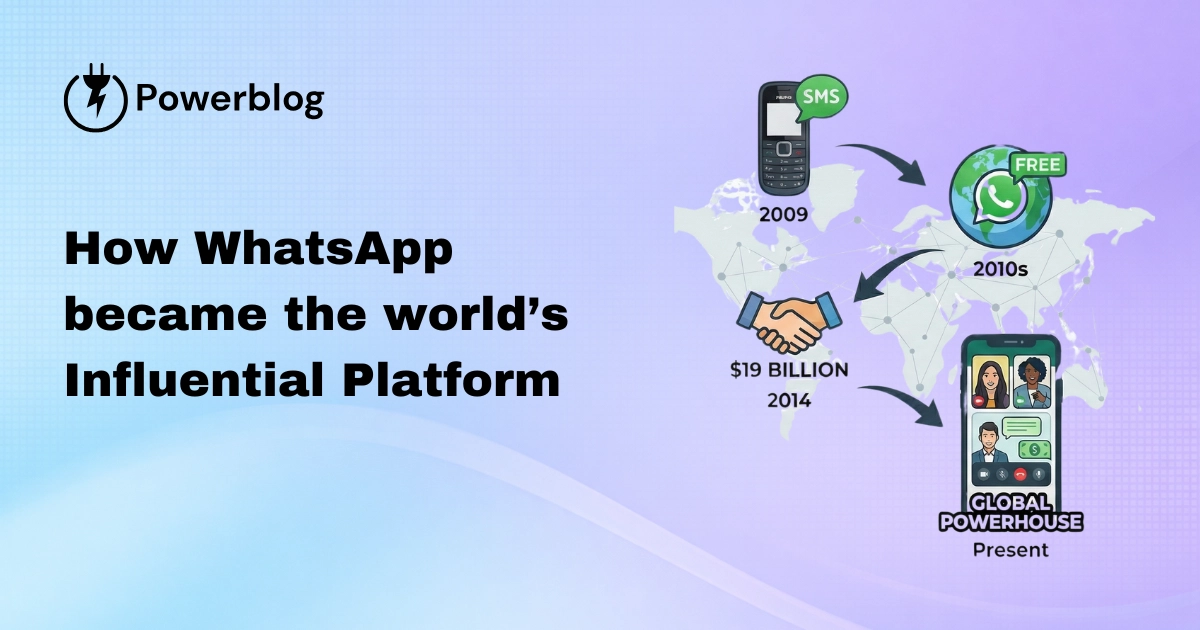
In the span of just over a decade, a simple application designed to show status updates has morphed into the digital nervous system of the planet. WhatsApp is no longer just an app; it is a utility as essential as electricity for billions of people. From facilitating billion-dollar business deals to connecting families across continents, its influence is undeniable.
But how did a startup with a strict "no ads" policy rise to dominate the global telecommunications industry? This deep dive explores the strategic decisions, technological shifts, and staggering numbers that cemented WhatsApp's position as the world's most influential communication platform.
The Genesis of a Giant: From Status Updates to Messaging (2009–2014)
The story begins in 2009 when founders Jan Koum and Brian Acton, former Yahoo employees, incorporated WhatsApp Inc. in California. Interestingly, the original concept was not an instant messaging service but a platform for users to display "statuses" alongside their contacts' names.
The pivot came when Apple introduced push notifications, allowing the app to alert users whenever a contact changed their status. Users began utilizing this feature to chat, pinging each other with custom statuses like "Can't talk, at the gym." Recognizing this behavior, the founders pivoted to a full-fledged messaging model, releasing WhatsApp 2.0 with a texting component that quickly replaced SMS for millions.
The "No Ads, Just Games" Philosophy
Unlike many Silicon Valley contemporaries that chased advertising dollars from day one, WhatsApp adhered to a strictly private, ad-free user experience. Koum famously kept a note from Acton taped to his desk that read: "No Ads! No Games! No Gimmicks!" This user-centric approach built immense trust.
By focusing entirely on reliability and speed rather than data mining, they attracted a loyal user base that grew organically through word-of-mouth. This philosophy was critical in early adoption, particularly in Europe and emerging markets where SMS costs were prohibitively high.
WhatsApp as a Global Communication Backbone
Today WhatsApp is actively used in more than 180 countries. making it one of the only platforms with near universal adoption. Families. students. professionals. and businesses all depend on it daily. turning WhatsApp into an essential part of global communication infrastructure.
In many countries WhatsApp has almost replaced traditional SMS and even phone calls. because it is faster. cheaper. and more feature rich. The app’s ability to function smoothly on low bandwidth networks also contributed to rapid growth in developing nations where expensive data plans and older devices are still common.
WhatsApp Usage Across Regions :
Country | Approx Usage % | Key Insight |
|---|---|---|
India | 85 percent | Largest global user base with massive daily activity |
Brazil | 98 percent | Used for personal. professional. and business communication |
Indonesia | 83 percent | Strong adoption among entrepreneurs and digital sellers |
UAE | 95 percent | Default channel for families. workers. and businesses |
Italy | 84 percent | Preferred over SMS. emails. and phone calls |
This level of penetration makes WhatsApp an unmatched force in global communication.
User Base Growth Over Time
The following table illustrates the explosive growth of the platform from its early days to its current dominance.
Year | Monthly Active Users (MAU) | Key Milestone |
|---|---|---|
2010 | 10 Million | Cross-platform support (Android/iOS) |
2013 | 200 Million | Voice messages introduced |
2016 | 1 Billion | End-to-end encryption rollout |
2020 | 2 Billion | Pandemic-driven usage spike |
2025 | 3.1 Billion | Global market saturation |
The $19 Billion Handshake: Facebook’s Strategic Acquisition
February 2014 marked a seismic shift in the tech world when Facebook (now Meta) announced it would acquire WhatsApp for a staggering $19 billion. At the time, WhatsApp had only 55 employees but served over 450 million monthly active users. Critics called the price inflated, but Mark Zuckerberg saw the potential for a platform that could connect the "next billion" internet users.
Facebook wasn't just buying an app; they were buying a monopoly on mobile engagement. WhatsApp had higher engagement rates than Facebook itself, with 70% of users active daily. The acquisition eliminated a major competitor and secured a foothold in international markets like India, Brazil, and Africa, where Facebook's penetration was growing but not absolute. This move allowed WhatsApp to utilize Facebook’s massive infrastructure to improve call quality and server reliability without compromising its core promise of privacy.
How WhatsApp Revolutionized Business Communication
The launch of the WhatsApp Business App in 2018 and the subsequent Business API changed the landscape of B2C communication forever. No longer limited to personal chats, the platform became a marketplace and a customer support hub.
The Rise of Conversational Commerce
Modern consumers prefer texting over calling. WhatsApp capitalized on this by allowing businesses to create catalogs, automate replies, and even process payments directly within the chat. In regions like Brazil and India, "WhatsApp Commerce" allows users to buy groceries, book ride-shares, and consult doctors without ever leaving the app. This ecosystem has forced traditional CRM platforms to integrate WhatsApp as a primary channel, shifting the standard of customer service from "email within 24 hours" to "instant chat resolution."
How Businesses Use WhatsApp
Business Need | How WhatsApp Helps |
|---|---|
Customer updates | Sends fast. real time notifications customers rarely ignore |
Product showcase | Shares photos. catalogs. and videos for better clarity |
Appointment reminders | Ensures customers remember schedules promptly |
Customer support | Allows quick problem solving through chat |
Lead follow ups | Delivers higher conversion due to faster engagement |
Features That Sealed the Deal
Several key technological innovations allowed WhatsApp to maintain its lead over competitors like Telegram and Signal.
End-to-End Encryption
In 2016, WhatsApp rolled out end-to-end encryption for every form of communication on its platform. This meant that not even WhatsApp or Meta could read user messages. This feature became a significant selling point in an era of increasing data privacy concerns, effectively democratizing military-grade security for the average smartphone user.
Cross-Platform Accessibility
Unlike iMessage, which is locked to the Apple ecosystem, WhatsApp works seamlessly across low-end Android devices, high-end iPhones, and desktop computers. This hardware agnosticism ensured that a user in New York with an iPhone 16 could communicate flawlessly with a relative in Mumbai using a budget Android device, breaking down economic barriers to communication.
The Network Effect. What Made WhatsApp Unstoppable
WhatsApp grew stronger because every new user increased its value for others. When families. schools. workplaces. and communities adopted the platform. it naturally became the central communication hub for everyone.
Its ability to work flawlessly on older devices made it accessible in regions where people still use entry level smartphones. This inclusivity played a major role in allowing WhatsApp to dominate developing and developed markets equally.
The interface was designed to be extremely simple. which meant people of all ages could use WhatsApp without any learning curve. Groups also became essential. turning WhatsApp into digital spaces where people coordinate daily activities. share memories. and manage community conversations
How WhatsApp Changed Daily Communication Habits
WhatsApp has shaped modern communication by making conversations instantly accessible. highly expressive. and incredibly convenient for billions of people. It pushed messaging culture forward by giving users a fast and free way to stay connected anytime they want.
Instant messaging changed the rhythm of daily communication. encouraging shorter. more frequent conversations instead of long calls that were common earlier. People now share updates. emotions. reminders. and everyday moments with WhatsApp because it makes communication effortless.
Multimedia sharing also transformed the way people express themselves. Photos. videos. documents. stickers. and voice notes added emotional depth and personality. turning WhatsApp into a communication experience rather than just a texting tool. Strong privacy measures increased user confidence. making it the app many rely on for personal. sensitive. or important conversations.
The Cultural Impact of WhatsApp Around the World
WhatsApp reshaped cultural communication habits by making texting the first choice for most people across the world. People now text before calling. because messaging feels faster. lighter. and less intrusive. which changed how communication flows socially and professionally.
Voice notes became a massive trend. especially in multilingual regions. because they allow people to express tone and emotion more naturally than text. Many users prefer sending short voice clips instead of typing. because it saves time and adds clarity.
WhatsApp also serves as a lifeline during emergencies. allowing communities to spread critical information during crises. natural disasters. or urgent situations. This ability to unify communities instantly has made WhatsApp essential in both everyday and high pressure scenarios.
The Future of WhatsApp’s Global Influence
WhatsApp continues to expand its influence as it introduces new features. improves security. and strengthens performance. making it an even more central part of global communication. As more businesses and communities rely on it daily. WhatsApp’s role will only grow stronger and more impactful.
Its power lies in simplicity. accessibility. trust. and global reach. WhatsApp is no longer just a messaging app. it has become a communication infrastructure that billions depend on. shaping how the world talks and interacts every day.
FAQ
Why is WhatsApp considered the world’s most influential communication platform?
WhatsApp is influential because it combines speed. privacy. ease of use. and global reach. making it the default communication tool for millions of people across the world.
Which countries rely heavily on WhatsApp?
Countries like India. Brazil. Indonesia. Italy. and the UAE rely on WhatsApp for everyday communication. customer interactions. and community coordination.
How does WhatsApp support business communication?
WhatsApp helps businesses with customer updates. product sharing. reminders. and real time support. making communication faster and more personal than email.
Is WhatsApp more secure than SMS?
WhatsApp provides end to end encryption. which protects messages and ensures higher privacy compared to traditional SMS or basic messaging services.
Why do people prefer WhatsApp over traditional communication methods?
People prefer WhatsApp because it is free. fast. convenient. multimedia friendly. and much more comfortable for regular communication compared to SMS or calling.
Will WhatsApp remain dominant globally?
WhatsApp is expected to remain dominant because of its massive user base. strong adoption among businesses. and its growing role in everyday digital communication.